The small business guide to corporate credit cards

A corporate credit card simplifies expense management and business purchases. But is it right for your company?

You may find it easier to qualify for a corporate credit card if you run a large limited company.
Managing credit card statements and employee spending can be time-consuming. Corporate credit cards offer a way to simplify these tasks and maintain control. However, they’re not the right fit for every business.
This guide explains what a corporate card is and helps you determine whether it’s the right choice for your company and team.
Key takeaways
A corporate credit card simplifies spending and expense tracking for businesses
Eligibility depends on the provider – but they're typically designed for larger companies with multiple employees
Businesses should set clear usage policies to avoid misuse by employees
Earn rewards and save money with a business credit card
What is a corporate credit card?
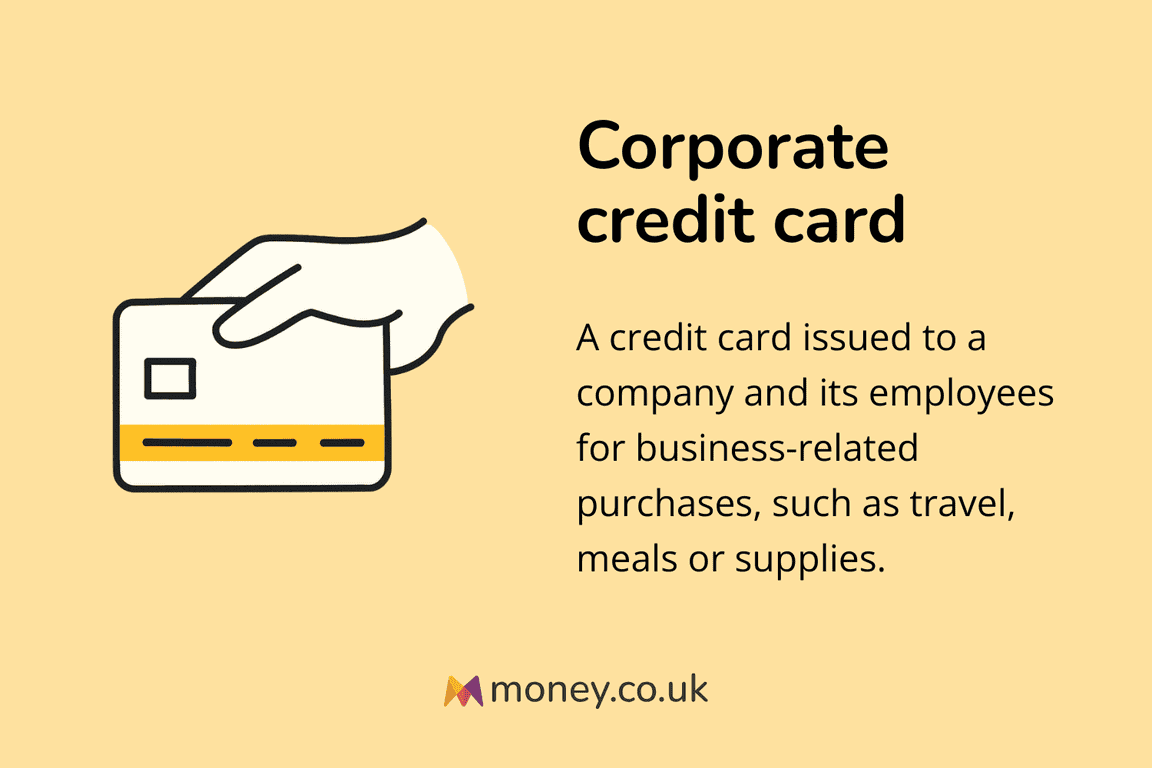
A corporate credit card functions similarly to a regular business credit card in that you use it for purchases and pay off the balance later, often with interest or charges if repayment is missed.
The main difference is that it’s typically issued to employees, allowing them to cover work-related expenses such as travel, meals, supplies, or hotel stays on behalf of the business.
This means employees don’t need to pay upfront and wait for reimbursement. Instead, the business generally settles the balance directly.
How does a corporate credit card work?
A corporate credit card works like a standard business credit card, but with a few key differences. Here’s how it works in five simple steps:
1. Apply: The business applies for a corporate credit card through its chosen provider
2. Get approved: Once approved, the provider issues cards to the selected employees
3. Spend: Employees use the cards for business-related purchases, such as:
Travel (flights or train tickets)
Hotel stays
Meals and drinks while travelling
Office supplies or equipment
Client entertainment or meeting costs
4. Track: The provider tracks all card spending and sends a single statement to the business
5. Repay: The business repays the balance. With some corporate cards, this needs to be in full at the end of each month, with fees charged if it's not. Some providers may allow repayments over time, with interest charged like standard business credit cards.
What’s the difference between a corporate and a business credit card?
It’s easy to think both card types are the same, but there are differences between a corporate and a business credit card. Let’s break it down.
Corporate credit card
Designed for larger companies with higher revenue and more employees
The business, not the employee, takes responsibility for the balance
Corporate credit cards often provide advanced reporting tools and custom spending controls
Approval typically requires a credit check on the business rather than on an individual
Business credit card
Ideal for small to medium-sized businesses, including sole traders
Repayment responsibility depends on the structure of the business. A sole trader typically takes on personal liability, while the business itself assumes responsibility in a limited company structure
Usually offers basic expense tracking and rewards
A simpler application process with fewer checks
Who can get a corporate credit card?
Card providers set their own eligibility criteria, so requirements vary. There’s also no fixed rule on who can get a corporate credit card, but the type of business you run can affect the application process.
If you run a larger limited company, you may find it easier to qualify, because you’re more likely to have the financial structure and credit history providers look for.
If you’re a sole trader or in a partnership, you can still apply, but there's a good chance you won't be approved as your business structure is unlikely going to meet the eligibility requirements for a corporate card.
💡 Editor insight: The SME blind spot: Why it pays to know your business credit score
How to apply for a corporate credit card
Here’s how to apply for a corporate credit card in five simple steps:
Compare providers: Find a card provider that matches your business needs, including fees, credit limits and features
Check eligibility: Review the provider’s requirements. Do you meet the minimum turnover? Do you have the right business structure and credit history?
Gather documents: Prepare the business’s financial records, company registration details and ID for directors or owners
Submit your application: Apply online or through a business banking contact
Wait for review and approval: The provider assesses your application, runs credit checks and, if satisfied, issues cards to the business and approved employees
How to create a corporate credit card policy
It’s important to set a clear policy around how to use a corporate credit card in your business. If not, you risk people using it inappropriately, which can leave you responsible for footing an unexpected bill.
Here are some things to consider when you create a corporate card policy.
Define who gets a card: Set clear criteria for which roles or employees can receive a corporate credit card
Set spending limits: Decide on individual card limits based on job roles, departments and needs
List approved expenses: Clearly outline what employees can and can’t use the card for
Explain how to report and track spending: Include instructions on submitting receipts, logging business expenses and meeting deadlines
Outline misuse consequences: Specify the actions that will be taken if the card is misused, including potential disciplinary measures and the requirement to repay any unauthorised expenses
Review and update regularly: Revisit the policy as the business grows or spending needs change
Make sure the language used in the policy is clear and direct, and that every cardholder reads and agrees to it before using their card.
Is a corporate credit card right for my business?
A corporate credit card can streamline spending, track expenses, and help control costs, but it’s not the right fit for every business. Before applying, consider your business's size, structure, and spending patterns.
If you frequently manage expenses for multiple employees and need more efficient administration, a corporate card could be a great solution.
However, for smaller businesses or sole traders, the requirements may mean it's not an option. In these cases, a standard business credit card or prepaid card might be a better choice.